
Testing
Complete Digestive Stool Analysis
This stool analysis evaluates:
- Digestion/Absorption Markers
- Gut Metabolic Markers
- Gut Microbiology Markers
CDSA Stool Analysis offers insight into common gastrointestinal conditions, such as:
- Maldigestion
- Malabsorption
- Irritable Bowel Syndrome (IBS)
- Altered GI immune function
- Bacterial/fungal overgrowth
- Chronic dysbiosis
Functional Liver Detoxification Profile
Conditions that may benefit from undertaking a Functional Liver Detoxification profile:
- Chronic fatigue
- Food intolerances
- Unexplained Headaches
- Multiple chemical sensitivities
- Hormonal imbalances
- Multiple drug therapy
- Known liver issues including fatty liver
Urinary oestrogen Metabolite Testing
The view that all oestrogens are ‘bad’ and cause cancer is a simplistic one. However, Estradiol (E2) and Estrone (E1) are metabolised into at least 14 different species. These breakdown products and have their own specific biological actions; some have the stimulatory properties of estradiol whilst others are weak and antagonistic to other oestrogen molecules. An imbalance of the stimulatory versus weak oestrogen metabolites have been observed to be associated with many different health disorders. Whilst high levels of the 16α-hydroxyestrone stimulate oestrogen and raise cancer risk, lower levels are associated with osteoporosis. In contrast, if the weak oestrogens are high they protect against cancer but inhibit bone growth. Therefore the oestrogen metabolites are not inactive excretion products but powerful molecules in their own right and should be monitored.
Urinary oestrogen metabolite testing is a comprehensive assessment of oestrogen metabolites for the prevention and treatment of oestrogen-related symptoms and conditions.
Conditions that may warrant urinary oestrogen metabolite testing:
- Osteoporosis
- Depression
- Uterine Fibroids
- Hormonal Headaches/Migraines
- Loss of Libido
- Reproductive Cancers
- Mood Disorders
- Fatigue
- Cardiovascular Disease
- Menopausal Symptoms
- Premenstrual Syndrome
- Endometriosis
Dutch Hormone Testing
Urinary Organic Acid Testing
This test is evaluates:
- Citric acid cycle abnormalities
- B-group vitamin utilisation
- Neurotransmitter abnormalities
- CoQ 10 sufficiency
- Amino acid insufficiencies
- GUT Dysbiosis
- Yeast infestation
- Nutritional deficiencies
- Fatty acid metabolism
Conditions that may benefit from Organic Acid testing:
- Fatigue
- Mood changes
- Blood sugar dysregulation
- Weight gain
- Nausea
- Multiple chemical sensitivity
- Bloating, gas and distention
- Autoimmune disorders
- Dermatitis
Salivary Hormone Testing
Common Conditions that may benefit from Salivary Hormone testing:
- Hot Flushes
- Weight gain
- Night sweats
- Depression
- Irregular menstruation
- Mood changes
- Brain fog
- Vaginal dryness
- Bone loss
- Dry skin
- Fatigue
- Insomnia
- Disturbed sleep patterns
- Low libido
- Infertility
- Miscarriage
- PMS
- Symptoms of menopause
Adrenal Hormone testing
Common Conditions that may benefit from Adrenal Hormone testing:
- Anxiety
- Poor concentration, ‘brain fog’
- Low Energy levels
- Fatigue
- lethargy
- Salt cravings
- Mild depression
- Sexual dysfunction
- Irregular sleep patterns
- Blood Pressure disturbance (high or low)
- Depression
- Insomnia
Methylation Profile
Conditions associated with impaired methylation include:
- Allergies
- Diabetes
- High folate supplementation
- Cancer
- Infertility
- Miscarriage
- Chronic Fatigue Syndrome
- Mental health disorders
- Cognitive decline
- Oestrogen dominance
- Cardiovascular disease
- Schizophrenia
Hair Test 500
Do you want to know if you are eating the right foods for your body? Adelaide Natural Fertility is proud to offer Bio-Compatibility Hair Analysis! This non-invasive test is ideal for children and people of all ages that would like to improve their health by working with their diet first.
Some of the areas that the Hair Test 500 is getting particularly good results include: Bloating, Rosacea, Psoriasis, Indigestion, Heartburn, Asthma, Diarrhoea, Sinusitis, Constipation, Hayfever, Headaches & Migraines, Acne, Eczema, Pre-menstrual issues, Arthritis & low immunity.
The standard Australian test covers a list of over 500 standard items – including all food groups, bathroom, laundry, and kitchen products. This includes common local brands found in supermarkets and health food stores. Each item is tested in the form it is usually consumed (both raw and cooked where applicable).
Additional food, supplement, personal care, & household cleaning items, as well as a range of gluten free items, can be tested if they are not part of the standard list at a small additional cost.
How do I access the Bio-Compatability Hair Test?
Text the clinic on 0414 855 722, and ask for an application to be emailed out, or to arrange collection OR Email us at enquiries@adelaidenaturalfertility.com.au and we can email you an application form. Once you have completed the form, cut a small sample of hair (about the size of your thumb nail). Put that in a small clip lock bag; return the completed form, along with your hair sample and payment to the clinic. Results usually take 2 weeks, so we suggest booking your consult to review your results 2-3 weeks after your hair sample has been returned to the clinic.
NB - Consults to dicuss the results of the Hair Test 500 are available in-clinic or by Phone or Skype.
Live Blood Visualisation
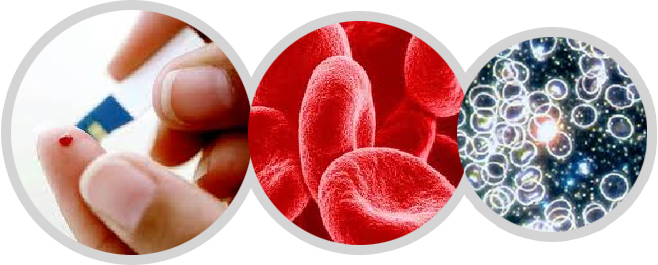
Live Blood Visualisation is not diagnostic, but, rather a screening tool which enables the practitioner to question the patient about their current health situation in order to ascertain underlying factors that may be contributing to the patient’s health concerns.
Live Blood Visualisation allows the practitioner to design highly individualised treatment protocols, incorporating changes in diet and nutrition as well as the application of specific and appropriate supplements.
A tiny drop of blood is collected onto a microscope slide via a finger prick and examined. Aspects of the blood sample that are examined include:
- The size & shape of red blood cells (RBC’s).
- The size, shape, number and activity levels of white blood cells (WBC’s).
- The number of chylomicron’s
- Other elements including, uric acid crystals and markers of oxidative stress
During this process, your blood is visible on a computer screen, enabling you to see your blood and and ask questions at the time.
Disclaimer: Live Blood Visualisation is used purely as a screening tool. Live Blood Visualisation is not a diagnostic tool - but used in conjunction with additional tests and thorough case taking, it can assist the practitioner in your treatment. It is important to note that other pathology testing and examination by a physician is required for a specific medical diagnosis.
Bio-Impedance Analysis
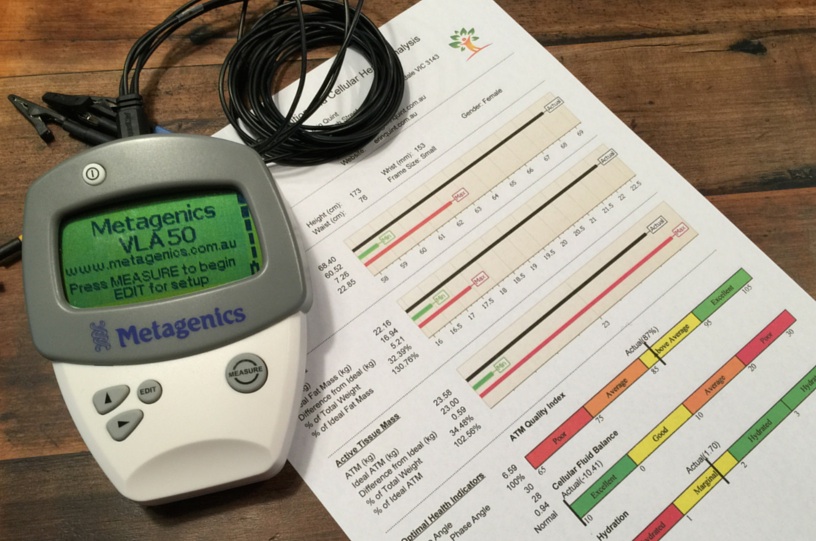
Bio-Impedance Analysis, is a simple, non-invasive, scientifically validated clinical test that measures body composition, including lean muscle mass, fat mass and markers of hydration. It was originally developed to monitor patient’s health after surgery and has been used in several NASA space missions to monitor the health of astronauts.
What can a Bio-Impedance Analysis tell you about me? Bio-Impedance Analysis is a tool that gives invaluable information about your current health status, including:
- your ideal weight for your height and frame size
- your total fat mass
- your ideal fat mass
- your total fat mass as a percentage of bodyweight
- your total muscle mass
- your ideal muscle mass
- your total muscle mass as a percentage of bodyweight
- your fat to muscle ratio
- your metabolic rate
- how well hydrated you are
- your total body water
- the total fluid inside your cells
- the total fluid outside your cells (fluid retention)
- the ideal amount of fluid outside your cells
- your risk for metabolic syndrome or Syndrome X
How does Bio-Impedance Analysis help me? Bio-Impedance Analysis measures parameters in your body that, in conjunction with the proper nutritional supplementation, diet and lifestyle changes can help you to:
- lose weight and monitor your fat mass
- Increase and monitor your muscle mass
- Improve your energy levels
- Support the nutrition and health of your cells
Fitgenes Genetic Testing (DNA Testing)
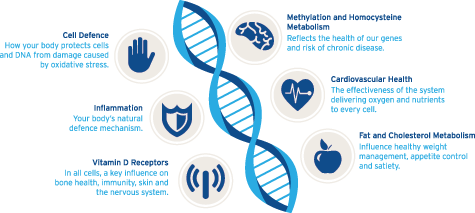 Discover the powerful interaction between genetics, diet and lifestyle to meet your personal health and performance goals.
The Fitgenes Health and Wellbeing genetic profile report is an in-depth analysis of the genetic variations (similar to 23 and Me) that can influence the way the body responds to what we eat, how we exercise and the way we live.
Personalised genetic profiling Personalised genetic profiling offers profound insight into how your body responds to diet, exercise and lifestyle choices. Understanding how to interpret the results of your profile report and convert the information in to programs for actionable, everyday health and wellbeing, is where Fitgenes accredited practitioners, such as Michelle Edwards, can offer you the potential to be the best you can be.
Our approach is based on the science of nutrigenomics which looks at the interaction between your genes, nutrition and lifestyle choices, and how these influence the genes’ messages. These messages instruct your body on how it should respond to external influences such as diet and lifestyle choices. The good news is expression of the genes analysed by Fitgenes is modifiable which means our genes are not our destiny. Effectively, how your genes are reacting to external factors is analysed and reported on, and a plan to address any negative reactions prepared, based on your unique genetic profile and needs.
Carb Choice/AMY1

Why should you care about your AMY1 gene? Scientific studies have shown that variations in the human salivary amylase gene (AMY1) differ based on populations, which have traditionally eaten high starch diets, compared to those who have traditionally eaten low starch diets. Variations within the AMY1 gene influence how well your body can breakdown and process starch, meaning that some people can tolerate these carbohydrates better than others. Starch is the most common carbohydrate included in human diets - however, there is a considerable range of variation between cultures of dietary starch intake. Traditionally, "high starch" populations tended to be agricultural societies and arid region hunter-gathers, while "low starch" populations included rainforest and arctic hunter-gatherers and some pastoralists. What is Amylase? Amylase is found in our saliva and plays a major role in the digestion of starch, which is a carbohydrate found in grains, legumes, fruit, vegetables, nuts and seeds. Amylase begins the process of carbohydrate metabolism in the mouth. 50% of bread starch and 25% of pasta starch is broken down during the short chewing time of 19 to 27 secs. What will knowing my AMY1 gene variation tell me?
A Lower AMY1 copy number indicates:
- Reduced amount of enzyme in your saliva needed to break down starch
- A reduced tolerance of high-starch diets
- A greater risk or predisposition to obesity
- Reduced glycaemic control (reduced glucose or blood sugar control)
- Increased risk for metabolic abnormalities
- Higher AMY1 copy numbers mean individuals are better adapted to a high-starch diet, lower copy numbers means less tolerance.
Testing your AMY 1 gene to help you understand:
- How effectively do you metabolise and tolerate carbohydrates
- How effectively do you metabolise and tolerate gluten
- Do carbohydrates put you at an increased risk of being overweight
- Do carbohydrates put you at an increased risk of having diabetes
- How many grams of carbohydrates can you eat per day
- What type of carbohydrates should you avoid
- How effectively do you use your carbohydrates for energy
Who should test their AMY 1 Gene? Anyone who wants to understand how their body metabolises and tolerates carbohydrates and make the best dietary choices for themselves.
- Women with PCOS
- Gluten intolerant or Coeliacs
- Food sensitivities
- Struggling to lose weight or maintain weight loss
- Diabetic or insulin resistant
- Gut dysbiosis
- Autoimmune issues
- Persistent infections such as thrush or urinary tract infections
- Iron Studies
- Liver Function Test
- Complete Thyroid Profile
- Urinary Iodine Spot
- Coeliac Profile
- Fasting Insulin
- Hormones
- Vitamin, Mineral and Antioxidant Levels
- Semen Analysis – including DNA fragmentation testing
- MTHFR Genetic Testing
- Coeliac Gene Test